TAG

#servicii publice

4 articles
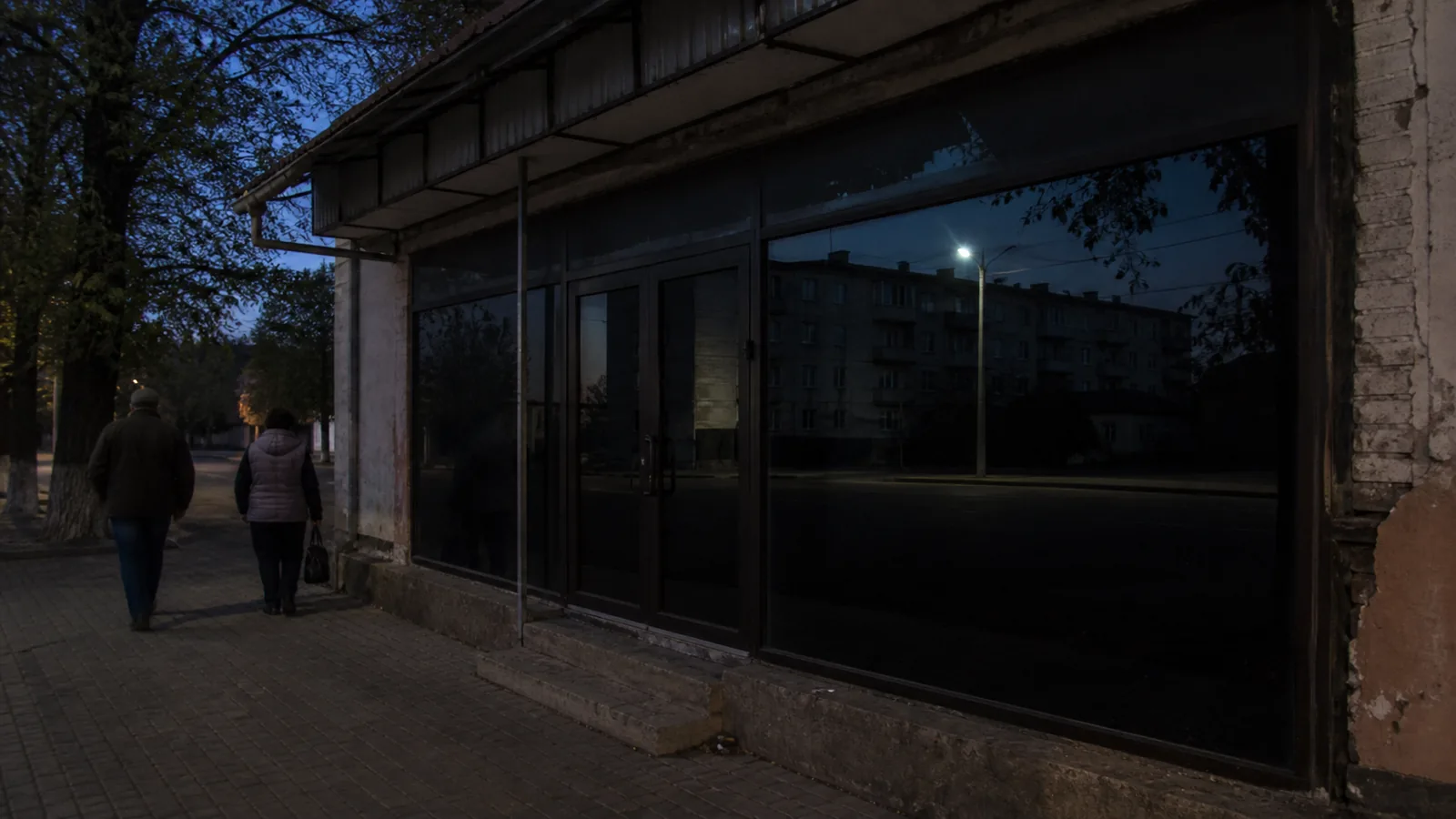
The window of a small shop, completely dark, at the blue hour of the evening. The dark glass reflects the light of a street lamp and the silhouette of a block of flats across the road. Two people walk along the pavement, seen from behind.
PUBLIC SERVICES

What changes in Ungheni under the two states of alert: shop windows go dark at 18.00, drinking water no longer washes the streets

On 28 July the Government declared a national state of alert in the energy sector and a state of hydrological alert, both for 30 days. On 3 August, the National Crisis Management Commission adopted two binding decisions: the administrators of public buildings and commercial premises switch off fountains, shop windows and decorative lighting between 18.00 and 06.00 and cut at least 30% of their interior lighting, while drinking water from public systems may no longer be used to wash streets or fill swimming pools. In blocks of flats with lifts, a notice must be posted on the ground floor. The next day, for the evening of 4 August, the power system had a forecast deficit in commercial terms between 21.00 and 23.00.

Ion Calmis·5 August 2026· Explainer
1/3 · reporting underway· got a tip? write to us →
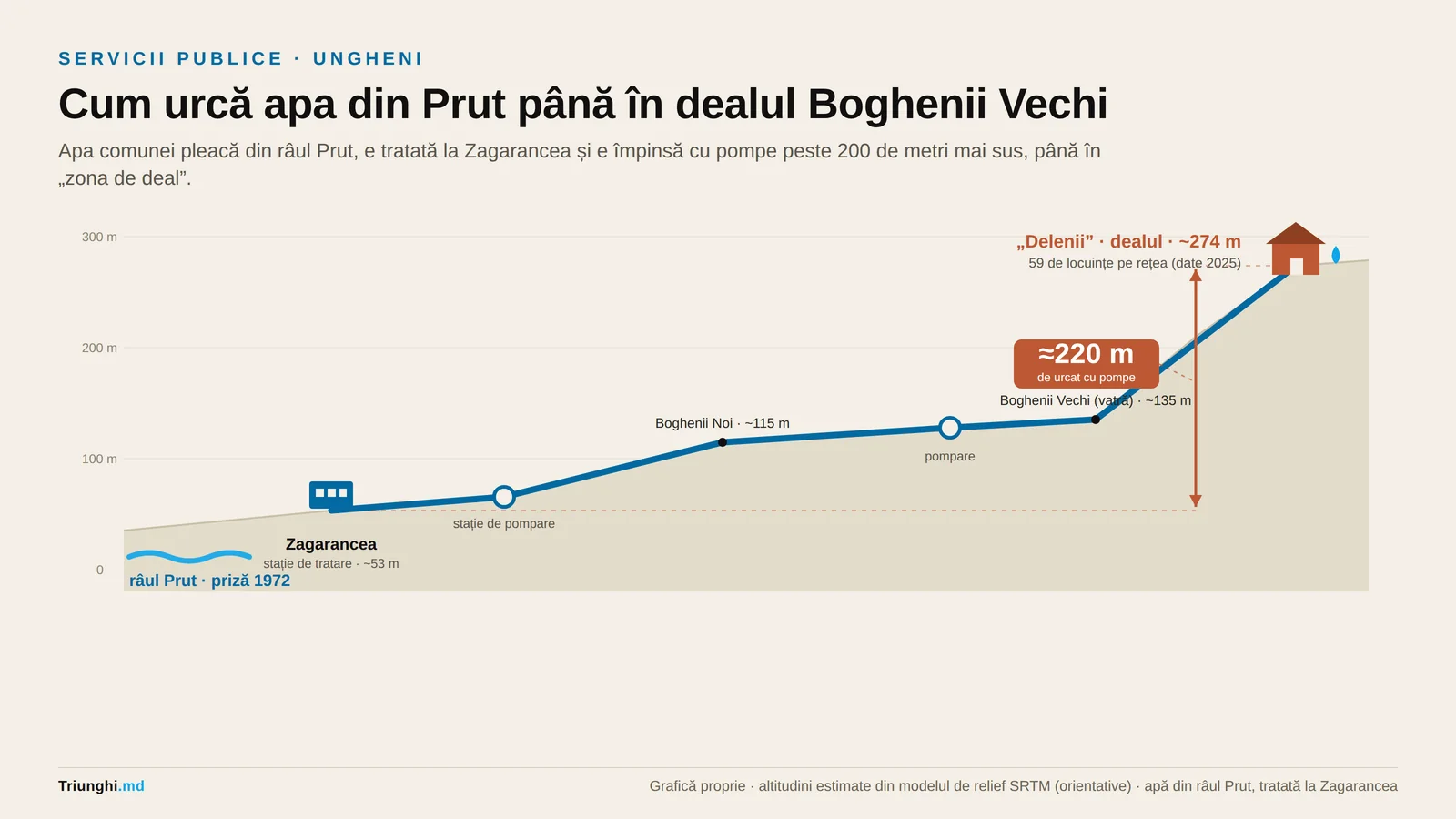
An elevation profile showing the water's path from the Prut river and the Zagarancea treatment station, at roughly 40–50 metres altitude, climbing toward the hill of the village of Boghenii Vechi, at roughly 274 metres, with two pumping stations along the way.
PUBLIC SERVICES

How water climbs from the Prut up to the hill of Boghenii Vechi: the commune has brought its water main into all four of its villages

The Boghenii Noi commune hall announced on 22 July that it had completed connecting the village of Boghenii Vechi to the water main, including the 'hill zone' — the hardest part to supply, because the water has to be pumped more than 200 metres higher than the source. The water comes from Zagarancea, from the Prut river, the same source that also supplies the town of Ungheni. In official statistics, the village shows a public water network only from 2025: 3.1 km and 59 connected dwellings. It is a small piece of a national process that, in 2024, delivered 507 of the 561 kilometres of new network precisely in villages.

Ion Calmis·23 July 2026· Analysis
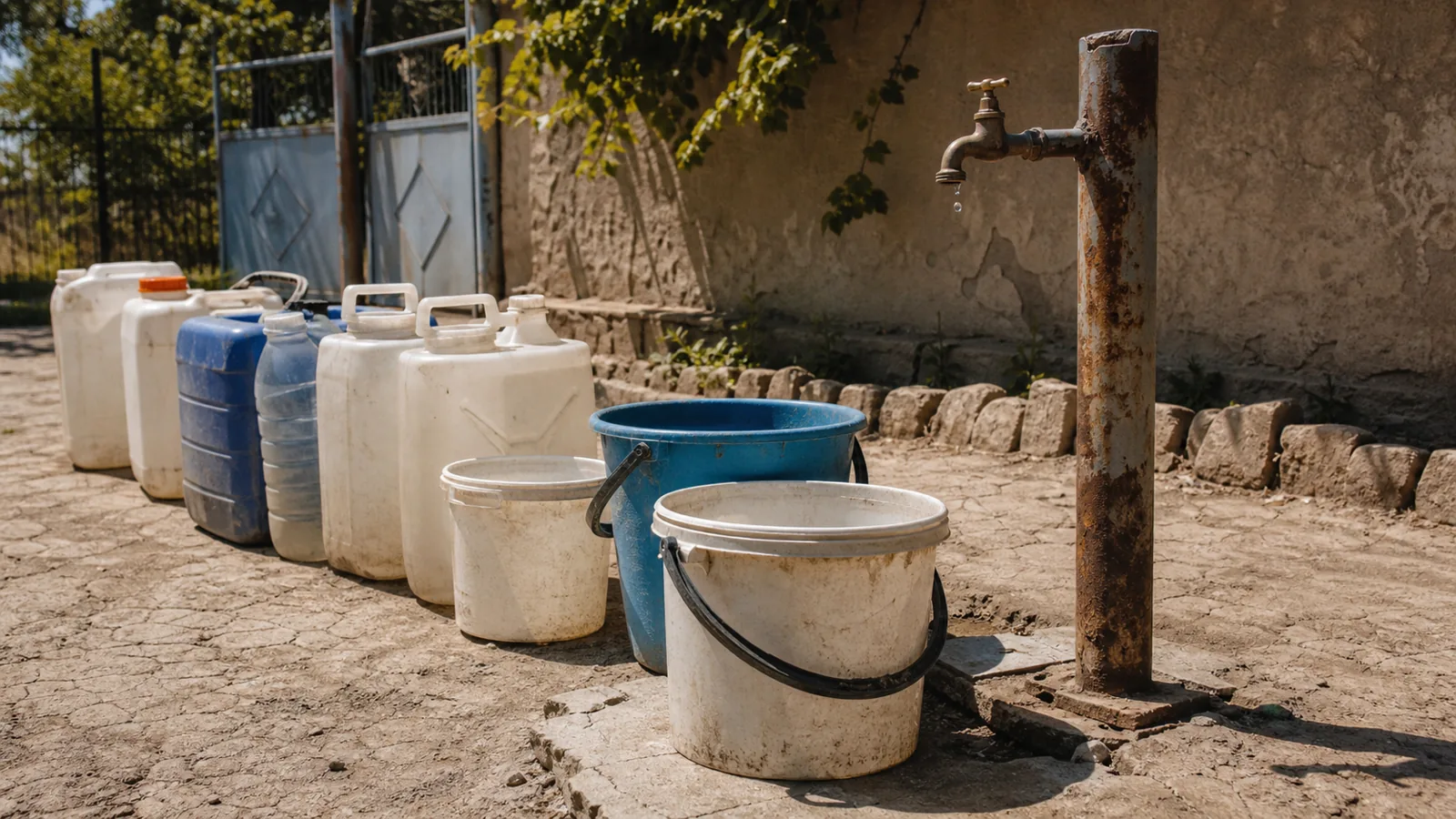
Illustration: empty plastic canisters and buckets lined up beside a rusty yard standpipe barely dripping water, on dry cracked ground in a rural Moldovan household under harsh summer light, with no identifiable people.
PUBLIC SERVICES

90,000 lei for a well, yet Petrești still has no water: villagers demand an inquiry

Since late June, residents of Petrești commune (Ungheni district) have complained of going days on end with no water at the tap, especially in the “hill area”, and on 5 July they launched a petition to the mayor's office and the Local Council: they want an inquiry, a public schedule of the cut-offs and, if wrongdoing is found, the dismissal of the official in charge of water distribution. Mayor Serghei Gorea had already replied publicly on 27 June that the problem is being taken seriously — the commune dug a new well, for which the Council allocated 90,000 lei — and points to the drought and the heatwave. Petrești, one of the district's largest villages by number of houses connected to the mains (1,052), depends on its own municipal enterprise, Servicom-Petrești, not on Apă-Canal Ungheni.

Ion Calmis·7 July 2026· News